
Endoscopy is essential to early detection of stomach and colon cancer, and endoscopic surgery is now widely used for treatment as well. We offer both upper and lower endoscopy, and endoscopic surgery, here.
If you've been putting off a concern out of worry about discomfort, please feel free to simply tell your physician you'd like the examination to be as comfortable as possible.
Tests and procedures available here
- Upper gastrointestinal (stomach, duodenum) endoscopy
- Lower gastrointestinal (colon) endoscopy
- Endoscopic ultrasound
- Bronchoscopy
- Endoscopic polypectomy
- Endoscopic mucosal resection (EMR)
- Endoscopic submucosal dissection (ESD)
- Endoscopic hemostasis
- Endoscopic foreign body removal
- Endoscopic dilation of a stricture
- Endoscopic stent placement for malignant gastrointestinal stricture (stomach, duodenum, colon)
- ERCP (endoscopic retrograde cholangiopancreatography), including endoscopic sphincterotomy, biliary stent placement, and stone removal
- Percutaneous endoscopic gastrostomy (PEG)
How a test is arranged
All endoscopy is by appointment. After your physician's assessment, a booking is made either through the endoscopy unit or at your outpatient visit. If a checkup or another institution has already recommended endoscopy, please talk to our Regional Liaison & Medical Consultation Office. Results are explained at a later outpatient visit.
Upper endoscopy (stomach and duodenum)
- The procedure itself takes around 10 minutes if no treatment is needed.
- Please fast from 8pm the night before until an hour after the test finishes; water or caffeine-free tea is fine.
- A local anaesthetic gel and spray is used beforehand where appropriate.
- We don't provide a change of clothes, so please wear something comfortable with a separate top and bottom on the day.
Lower endoscopy (colon)
- The procedure itself takes around 30 minutes if no treatment is needed.
- You'll follow a special low-residue diet the day before.
- A laxative is taken the evening before and again the morning of the test to clear the bowel; please fast from the morning of the test until it's complete.
- You'll change into disposable test underwear and a gown provided at the hospital.
- A small polyp found during the test is often removed using an electric current on the spot; if this happens, some restrictions apply afterward (alcohol, exercise, bathing, meals, travel), so please ask about these when you book.
Sedation and pain relief
You can choose whether to have sedation or pain relief for a gastrointestinal endoscopy.
If you choose sedation
We check your overall condition beforehand with whichever of a blood test, ECG, or chest X-ray is needed, and select a dose suited to you individually. Blood pressure, ECG, and oxygen levels are monitored throughout for safety, and you'll be in a drowsy, relaxed state during the test.
If you choose sedation
- Please rest at the hospital for at least an hour afterward.
- You cannot drive a car, motorbike, or bicycle on the day of your test.
- Please avoid going out or working that day, and rest once home.
- Patients aged 75 or older need someone to accompany them home.
If you prefer not to use sedation
We'll talk you through helpful breathing techniques and tips for the upper endoscopy beforehand, and our staff stay close by, offering a hand on the back and other support to help the test go as comfortably as possible.
PEG (feeding tube placement)
We perform PEG (percutaneous endoscopic gastrostomy) here. If a swallowing condition means a feeding tube may be needed, please talk to our Regional Liaison & Medical Consultation Office. Our certified nurse specialist is also available afterward for any concern about the tube site.
Our endoscopy system
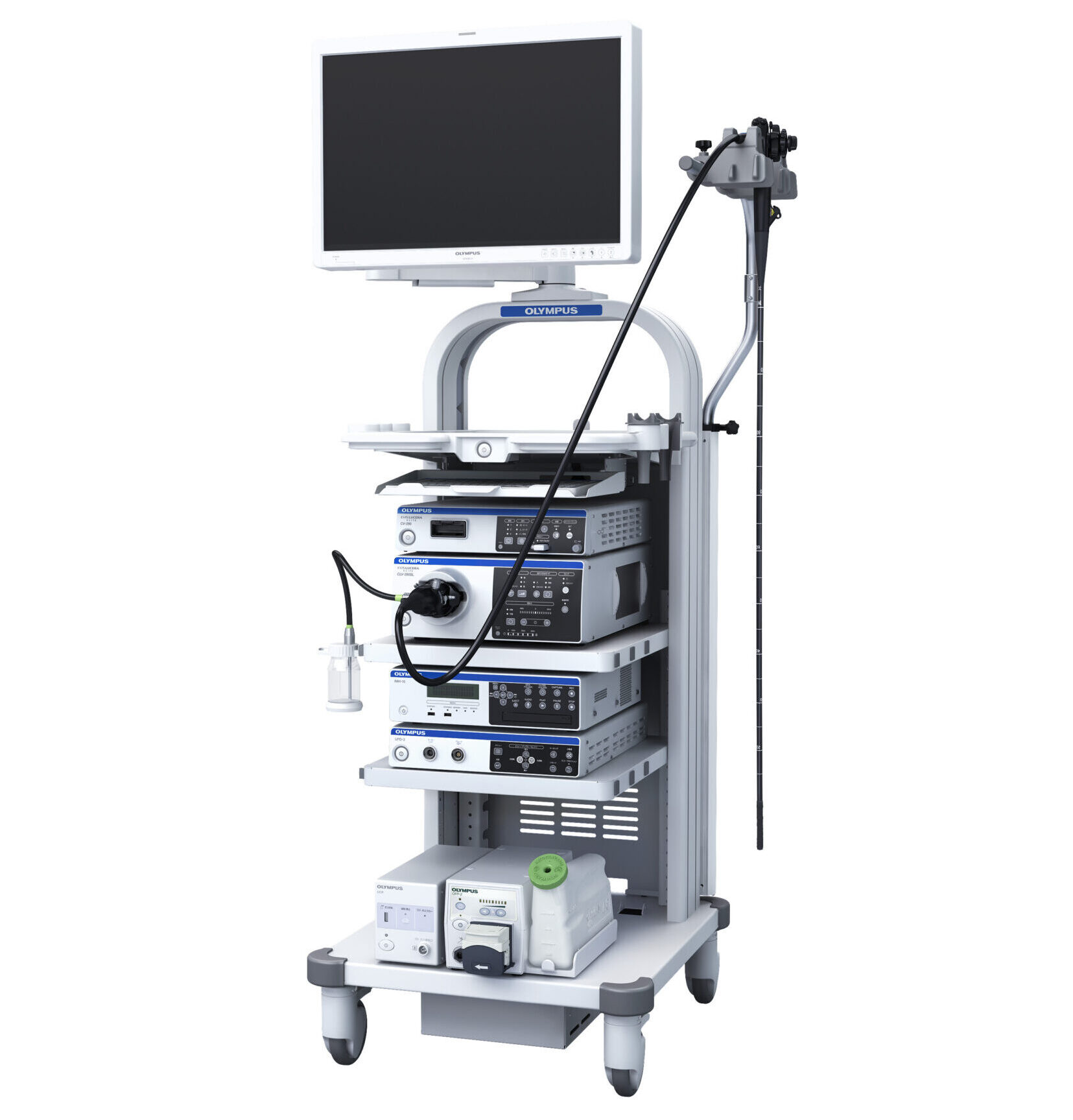
Our endoscopy equipment includes Narrow Band Imaging (NBI), a technology that highlights fine detail in the mucosal surface not normally visible, supporting earlier detection of subtle changes.
To book a visit, please use the form or call us. You can give up to three preferred dates, and choose from multiple time slots for each.